What Causes Active Acne and Repeated Breakouts?
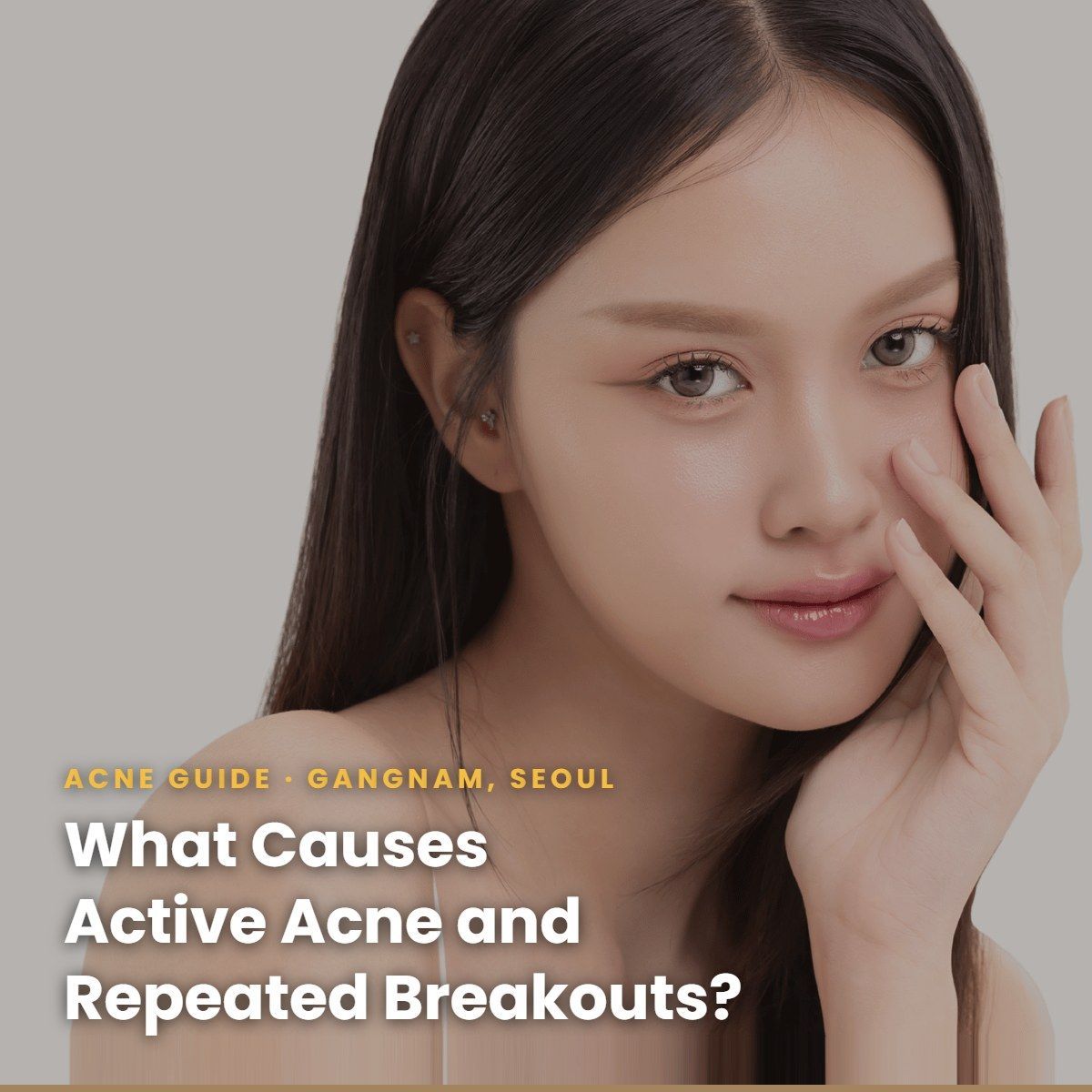
Acne develops when four things happen in the pore: too much oil, dead skin cells sticking together and blocking the opening, acne bacteria multiplying inside, and inflammation. Hormones, genetics, certain skincare and hair products, friction, stress and some medicines can trigger or worsen these steps, which is why breakouts keep coming back until the underlying causes are treated.
Acne Starts Weeks Before You See It
A spot that appears today usually began forming inside the pore several weeks earlier. The earliest stage, called a microcomedone, is invisible. It slowly grows into a blackhead, whitehead or inflamed spot. This is why acne treatments take time to show results, and why breakouts can continue for a while after you start a new routine. Understanding this timeline helps you stay patient and avoid switching products every few days, which often makes things worse rather than better.
The Four Steps Inside the Pore
- Excess oil Oil glands, stimulated mainly by hormones, produce more sebum.
- Clogging Dead skin cells inside the pore stick together instead of shedding, forming a plug.
- Bacteria Acne bacteria, naturally present on skin, multiply in the oily, blocked pore.
- Inflammation The immune response creates red, swollen and sometimes painful spots.
Effective acne treatment targets one or more of these steps. That is why combinations, such as a retinoid with an anti-bacterial ingredient, often work better than a single product.
Types of Acne Spots
| Type | What it looks like | What is happening |
|---|---|---|
| Blackheads | Small dark dots | Open, clogged pore |
| Whiteheads | Small skin-coloured or white bumps | Closed, clogged pore |
| Papules | Small red, tender bumps | Early inflammation |
| Pustules | Red bumps with white or yellow centres | Inflammation with pus |
| Nodules and cysts | Large, deep, painful lumps | Deep inflammation; higher scar risk |
Hormones Are the Most Common Trigger
Androgens, hormones present in both men and women, enlarge oil glands and increase oil production. This is why acne often begins at puberty. In women, breakouts may flare before periods, during pregnancy, after stopping hormonal contraception or with conditions such as polycystic ovary syndrome. In men, higher androgen levels often mean oilier skin throughout adulthood. Hormonal acne commonly affects the lower face, but it can appear anywhere.
Genetics Influence How Your Skin Responds
If your parents had acne, especially severe acne, you are more likely to have it too. Genetics influence how much oil you produce, how your pores shed dead cells and how strongly your skin reacts to bacteria. You cannot change your genes, but knowing your family history helps explain why acne may be stubborn and why early treatment matters to prevent scarring.
Acne is not a hygiene problem. It is a skin condition with clear biological causes.
Products and Habits Can Trigger Breakouts
What touches your skin can contribute to clogging and irritation. Heavy creams, oily sunscreens, some makeup, hair oils and styling products can block pores, especially along the hairline and forehead. Friction from helmets, phone screens, face masks and chin straps can cause acne in those areas. Picking and squeezing spreads inflammation and increases the risk of scars and dark marks.
- Choose products labelled non-comedogenic.
- Keep hair products away from the face.
- Clean phone screens and pillowcases regularly.
- Change masks often and avoid tight straps on the skin.
- Avoid picking or squeezing spots.
Stress, Sleep and Diet Play Supporting Roles
Stress can increase hormones that stimulate oil production and inflammation, which is why breakouts often appear before exams or busy periods. Poor sleep may have a similar effect. Research suggests that diets high in sugar and refined carbohydrates, and for some people dairy, may worsen acne, though the effect varies. These factors rarely cause acne on their own, but they can tip the balance in skin that is already prone to breakouts.
Some Medicines Cause Acne-Like Breakouts
Certain medicines can trigger or worsen acne. Examples include corticosteroids, some hormonal treatments, anabolic steroids, lithium and some anti-seizure medicines. Supplements containing high doses of vitamin B12 or whey protein have also been linked to breakouts in some people. If acne started or worsened after a new medicine or supplement, tell your doctor, but do not stop prescribed medicines without advice.
Climate and Travel Can Trigger Flares
Many visitors notice their acne changes in Seoul. Hot, humid summers increase oil and sweat, which can clog pores, especially under masks, hats and backpack straps. Cold, dry winters and indoor heating can dry the skin, and harsh acne products can then irritate it further, leading to more inflammation. Long flights, jet lag, late nights, new food and alcohol all add stress to the skin. Bringing your usual gentle products, avoiding trying many new ones at once and keeping hands away from the face help reduce travel breakouts.
Acne in Darker Skin Leaves Longer-Lasting Marks
In medium to darker skin tones, every inflamed spot can leave a brown or dark mark that lasts for months after the spot heals. These marks are not true scars, but they can bother people more than the acne itself. Preventing new spots is the most effective way to reduce them, and daily sunscreen stops the marks from darkening further. Gentle, consistent treatment is important, because irritation from strong products can also create new marks.
Why Acne Scars Form
When inflammation is deep or lasts a long time, it can damage the collagen around the pore. As the skin heals, it may produce too little collagen, leaving a dip, or occasionally too much, leaving a raised scar. Deep cysts, picking and delaying treatment all increase this risk. This is the strongest reason to treat moderate and severe acne early rather than waiting for it to pass.
Acne Look-Alikes Need Different Treatment
Not every bumpy breakout is acne. Fungal acne causes small, itchy, uniform bumps on the forehead and chest. Rosacea causes redness and bumps without blackheads. Perioral dermatitis causes small bumps around the mouth. Each needs different care, and some acne treatments can make them worse. A dermatologist can tell them apart quickly.
Why Breakouts Keep Coming Back
Many people treat each spot as it appears, but new spots keep forming because the underlying causes have not changed. Effective acne care focuses on prevention: reducing oil, keeping pores clear, controlling bacteria and calming inflammation over weeks to months. Stopping treatment as soon as skin clears often leads to a relapse, which is why doctors usually recommend a maintenance routine.
When to See a Dermatologist
See a doctor if your acne is painful, deep or cystic, if it leaves scars or dark marks, if over-the-counter products have not helped after two to three months, or if it affects your confidence. Early treatment reduces the risk of permanent scars. A dermatologist can combine prescription treatments with in-clinic options for faster improvement. You can read about our approach on the acne treatments page.
How Doctors Plan Acne Treatment
| Severity | Approaches often used |
|---|---|
| Mild (mostly blackheads and whiteheads) | Topical retinoids, salicylic acid, gentle peels |
| Moderate (red spots and pustules) | Topical combinations, sometimes oral antibiotics, light or laser treatments |
| Severe (nodules, cysts, scarring) | Oral medicines such as isotretinoin, close supervision |
A thorough doctor consultation helps decide which level of treatment you need.
Say this at your consultation
"My breakouts get worse before my period and along my jaw."
"I have tried many products, but new spots keep appearing."
"My acne leaves dark marks that last for months."
Frequently Asked Questions
Does chocolate cause acne?
Evidence is limited. High-sugar diets may worsen acne for some people, but no single food causes it for everyone.
Will acne go away on its own?
Some acne improves with age, but many adults continue to have breakouts. Treatment reduces spots and prevents scars.
Should I pop my pimples?
It is better not to. Squeezing spreads inflammation and increases the risk of scars and dark marks.
How long until acne treatment works?
Usually six to twelve weeks for noticeable improvement, because new spots form weeks before they appear.
Can sunscreen cause acne?
Some heavy sunscreens can clog pores. Choose lightweight, non-comedogenic formulas.
Tired of Breakouts That Keep Coming Back?
Send us photos and your current routine. Our English-speaking team will help you prepare for a dermatology consultation.
Book Your ConsultationReferences
- American Academy of Dermatology — acne causes and treatment guidelines.
- Journal of the American Academy of Dermatology — guidelines of care for the management of acne vulgaris.
- British Association of Dermatologists — acne patient information.
This guide was prepared and reviewed by our clinical team using publicly available dermatology information. It is general information, not medical advice.