Why Does My Face Look Hollow and Tired as I Get Older?
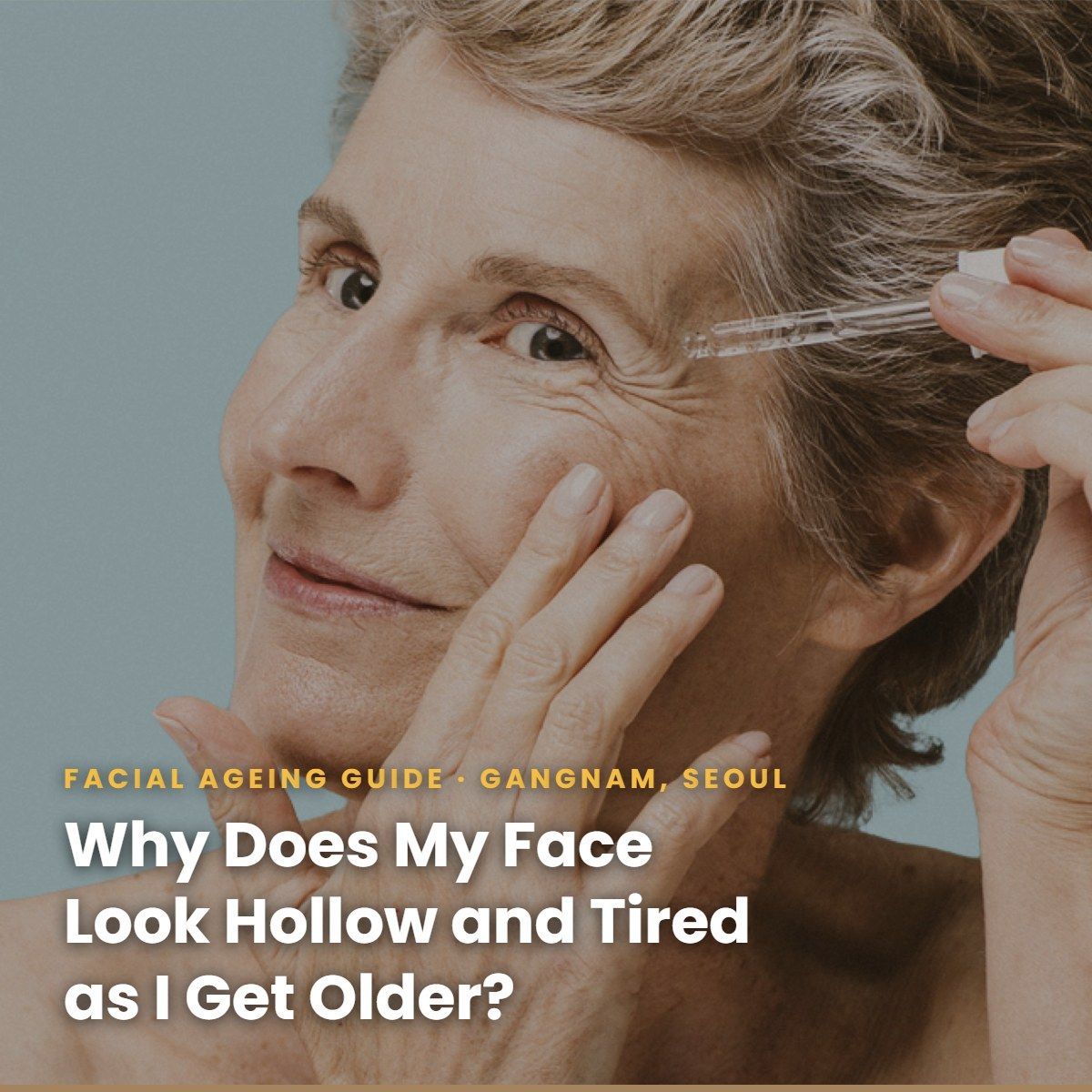
A face often looks hollow and tired with age because deep fat pads shrink and shift, the facial bones slowly recede and collagen in the skin thins. Volume usually goes first from the temples, under-eyes and mid-cheeks, creating shadows that read as tiredness. Weight loss, sun exposure, smoking and poor sleep can speed this up or make it more visible.
Tiredness Is Often a Shadow Problem
When people say they look tired even after a good night's sleep, they are usually reacting to shadows. A youthful face has smooth, continuous curves that reflect light evenly, from the temples down over the cheeks. As volume changes, small dips appear where the curves used to be, and each dip casts a shadow. The eye reads these shadows as fatigue, sadness or illness, even when you feel well. Understanding where these dips form, and why, explains why the same face can look rested in soft light and drawn under overhead lighting.
The Face Is Built From Separate Fat Compartments
Facial fat is not one even layer. It is divided into distinct compartments, some close to the skin and some deep against the bone. Research on facial anatomy shows that these compartments age differently. Deep fat pads that support the cheeks and the area under the eyes tend to lose volume, while some superficial pads may hold their volume or slide downwards. The result is a loss of support in the upper face and a relative heaviness lower down. This uneven change is why ageing can make the mid-face look flat while the jawline looks fuller.
Volume Usually Disappears in a Predictable Order
| Area | What changes | How it looks |
|---|---|---|
| Temples | Thinning fat and muscle over the side of the skull | Concave sides, a narrower upper face |
| Under-eyes | Loss of deep support below the lower lid | Hollows, shadows, a visible tear trough |
| Mid-cheeks | Deep cheek fat shrinks and descends | Flatter cheeks, deeper smile lines |
| Around the mouth | Bone and fat recede near the lips and chin | Thinner lips, marionette shadows |
The order varies between people, but the temples and under-eyes are often the first places where friends notice a change.
Bone Changes Quietly Reshape the Face
The facial skeleton is not fixed through adult life. Studies using CT scans show that the eye sockets gradually widen, the bone around the mid-cheek and the upper jaw recedes and the jaw angle can become less defined. These changes are slow and subtle, but they remove the scaffold that holds fat and skin in place. When the frame shrinks, the soft tissue above it has less support and settles into hollows and folds. This is one reason why two people of similar age can look very different: bone structure and the rate of bone change vary from person to person.
Thinner Skin Shows Every Contour
Skin naturally produces less collagen and elastin over time, and sun exposure accelerates this loss. Thinner skin drapes more closely over the structures below, so every dip and edge becomes more visible. It also reflects light less evenly, losing the soft glow associated with youth. Around the eyes, where skin is already very thin, this can make hollows look deeper and veins more visible. Improving skin quality does not replace lost volume, but thicker, healthier skin can soften how sharply hollows show.
Hollowness is rarely one problem. It is fat, bone and skin changing at slightly different speeds.
Weight Loss Can Reveal Hollows Suddenly
Losing weight, especially quickly or later in life, often shows first in the face. The deep facial fat compartments shrink along with body fat, and the skin may not adapt as easily as it did when younger. People who have lost a significant amount of weight through diet, intense exercise or weight-loss medication sometimes notice that their face looks older or more angular within months. Endurance athletes and people with very low body fat can have a similar look. This is not a reason to avoid healthy weight loss, but it helps explain sudden changes in the mirror.
Lifestyle Speeds Up or Slows Down the Process
Daily habits influence how quickly the face changes. Long-term sun exposure breaks down collagen and is one of the strongest factors in visible skin ageing. Smoking reduces blood flow to the skin and is linked to earlier volume loss and wrinkling. Poor sleep, high alcohol intake and chronic stress can make hollows look darker through puffiness, dehydration and dull skin. Some medical conditions and medicines also affect facial fat. None of these factors acts alone, but together they can make a face look several years older or younger than expected.
A Mirror and Photo Self-Check
- Use overhead light Stand under a ceiling light and note where shadows form.
- Check the temples Look for a dip between the outer brow and hairline.
- Look under the eyes Note a groove or shadow running from the inner corner.
- Turn to the side A flat or angled mid-cheek suggests lost support.
- Compare old photos Pictures from five to ten years ago show what has changed.
Old Photos Reveal What You Have Lost
Most people notice ageing gradually and adapt to it, so the mirror alone can be misleading. Comparing a recent photo with one taken several years earlier, ideally with a similar expression and angle, makes changes much easier to see. Look at the width of the upper face at the temples, the fullness under the eyes and the curve of the cheek in a three-quarter view. Many people are surprised to find that the change is not wrinkles but missing curves. These photos are also very useful for a doctor, because they show your own natural shape rather than an ideal.
Signs That Point to Volume Loss Rather Than Sagging
- Shadows that look worse under overhead light than in front light.
- Dips at the temples or under the eyes rather than heaviness at the jaw.
- A face that looks similar lying down and sitting up.
- Cheeks that look flat in a three-quarter view.
- A sudden change after weight loss.
Men and Women Lose Volume Differently
Men usually have thicker skin and a larger, more angular bone structure, which can delay visible hollowing. When it does appear, it often shows as flat cheeks and hollow temples that make the face look severe or gaunt. Women may notice changes more noticeably around menopause, when falling oestrogen affects collagen and fat distribution. In both cases the goal of any plan is to restore your own natural shape, not to create a different face. A masculine face benefits from strong, angular support, while a softer contour suits many women.
Treatment Comes After Understanding the Cause
Once the main cause is clear, options can be chosen to match it. Lost volume may be restored with hyaluronic acid fillers or gradual collagen stimulators, thin skin may benefit from skin boosters or energy treatments, and true sagging may need lifting. Many people need a small combination rather than a large amount of one product. The older post on how to fix facial fat loss without filler covers treatments in detail, and our anti-ageing treatments page gives an overview. A doctor consultation is where the cause is confirmed.
Say this at your consultation
"People keep telling me I look tired, even when I am not."
"My temples and under-eyes look more hollow than five years ago."
"I lost weight recently and my face changed quickly."
Frequently Asked Questions
At what age does facial volume loss usually start?
Subtle changes often begin in the thirties, but timing varies widely with genetics, bone structure and lifestyle.
Can facial exercises restore lost volume?
There is limited evidence that facial exercises replace lost fat or bone. They are unlikely to reverse hollowing.
Will gaining weight bring my face back?
Sometimes partly, but fat does not always return to the same facial compartments, and body weight changes elsewhere too.
Does skincare help a hollow face?
Sunscreen and retinoids can support skin quality, but they cannot replace lost fat or bone volume.
Is hollowness always a sign of ageing?
Not always. Some people have naturally hollow temples or under-eyes from a young age because of their bone structure.
Wondering Why Your Face Looks Tired?
Send us a recent photo and one from a few years ago. Our English-speaking team will help you prepare for your consultation.
Book Your ConsultationReferences
- Plastic and Reconstructive Surgery — studies on the facial fat compartments and their changes with age.
- Aesthetic Surgery Journal — CT-based research on age-related changes in the facial skeleton.
- American Academy of Dermatology — sun exposure, smoking and visible skin ageing.
This guide was prepared and reviewed by our clinical team using publicly available dermatology information. It is general information, not medical advice.