XERF vs Ultherapy: Which Gives Better Lifting in Seoul?
Radiofrequency vs microfocused ultrasound: how each device lifts, which layers it targets, how it feels and how long results last.
XERF uses monopolar radiofrequency to heat collagen-rich layers of the dermis and below, mainly tightening skin and improving firmness and jawline definition. Ultherapy uses microfocused ultrasound with real-time imaging to reach deeper connective tissue, including the SMAS layer, which suits deeper tissue lifting. Neither is better for everyone; the right choice, or a combination, depends on where your laxity is and your goals.
Quick comparison table
| Feature | XERF | Ultherapy |
|---|---|---|
| Technology | Monopolar radiofrequency (RF) | Microfocused ultrasound (MFU) with real-time imaging |
| Energy target | Dermis and subdermal collagen-rich tissue | Deeper connective tissue, including the SMAS layer |
| Primary goal | Skin tightening, collagen stimulation, facial contouring | Tissue lifting and collagen stimulation |
| Sensation | Warmth, with integrated contact cooling | Deeper pulses that may feel more intense |
| Downtime | Usually minimal | Usually minimal |
| Best for | Mild to moderate laxity, skin quality | Mild to moderate laxity, deeper tissue lifting |
| Typical maintenance | Every 6–12 months | Every 12–18 months, varies by patient |
Figures are typical ranges; your own plan depends on your skin and the doctor's assessment.
How each treatment works
XERF delivers controlled radiofrequency heat to collagen-rich layers beneath the skin, using two frequencies (6.78 MHz and 2 MHz) with contact cooling. This contracts existing collagen and stimulates new collagen and elastin, improving firmness, elasticity, jawline definition and overall contour.
Ultherapy uses microfocused ultrasound to create precise thermal points in deeper tissue, including the superficial musculoaponeurotic system (SMAS), the layer addressed in a surgical facelift. Built-in ultrasound imaging lets the doctor see the tissue layers while treating.
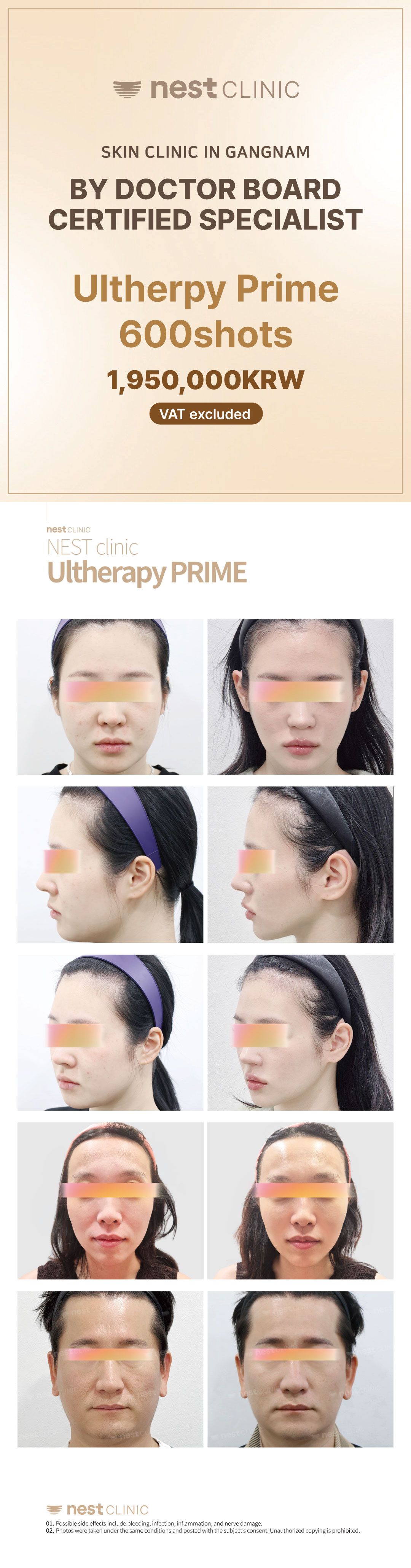
Real result: Ultherapy Prime
Example of an Ultherapy result from a Nest Clinic patient; individual results vary.
Which gives better lifting?
Both improve skin laxity, but they work at different depths, so the better question is which suits your concerns.
- XERF may suit: early skin laxity, jawline definition, mild jowls, skin texture and firmness, preventive anti-aging, and patients who prioritise comfort.
- Ultherapy may suit: deeper tissue laxity, brow lifting, mild to moderate neck laxity, and patients who benefit specifically from SMAS-level treatment.
Because the two devices act on different layers, a doctor may recommend combining them for patients with both skin-quality and deeper structural concerns.
Comfort and collagen stimulation
Many patients find XERF the more comfortable of the two, attributed to its contact cooling, even heat distribution and real-time energy adjustment. Ultherapy can produce deeper, sharper sensations because the energy reaches connective tissue below the skin. Comfort varies between people, and topical numbing or other comfort measures may be used when appropriate.
Both stimulate collagen through different mechanisms: XERF through uniform RF heating that remodels collagen and improves skin quality, Ultherapy through focused thermal coagulation points that support deeper structure. With both, improvement continues over several months as new collagen forms.
How long do results last?
XERF: improvement builds progressively over about 2–3 months, and results typically last around 6–12 months, so many patients plan maintenance about once a year.
Ultherapy: results also develop gradually over several months, and maintenance is commonly planned every 12–18 months depending on the patient.
Longevity depends on age, skin quality, natural collagen production and lifestyle factors such as sun exposure and smoking.
Choosing at Nest Clinic Gangnam
At Nest Clinic, a doctor examines your skin thickness, where the laxity sits (skin surface vs deeper tissue) and your goals before recommending XERF, Ultherapy or a combination, along with the appropriate shot count. The clinic is about 1 minute from Sinnonhyeon Station Exit 7 (7–10 minutes' walk from Gangnam Station). For RF-to-RF comparison, see XERF vs Thermage.
Reviewed by Dr. Joo Sohee
Representative director of Nest Clinic Gangnam, a doctor-led aesthetic clinic with a female medical team that treats local and international patients. This page is reviewed for medical accuracy; it is general information, not a diagnosis. Treatment plans are decided after an in-person consultation.
Clinic treatment counts as reported by Nest Clinic. About the clinic
Frequently asked questions
Is XERF or Ultherapy better for sagging skin?
It depends on the depth of the sagging. XERF mainly tightens the skin and improves firmness, while Ultherapy reaches the deeper SMAS layer for structural lifting; a doctor decides after examining you.
Which is less painful, XERF or Ultherapy?
Many patients find XERF more comfortable because of its contact cooling and even heating. Ultherapy can feel deeper and more intense, though comfort varies and numbing may be used.
How long do XERF and Ultherapy results last?
XERF results typically last about 6–12 months; Ultherapy maintenance is usually planned every 12–18 months. Both vary with age, skin quality and lifestyle.
Can XERF and Ultherapy be combined?
Yes. Because they target different layers, a doctor may combine them for patients with both skin laxity and deeper tissue sagging.
Is there downtime after XERF or Ultherapy?
Downtime is usually minimal for both. Temporary redness, swelling or tenderness can occur and usually settles within a few days.
Related treatments
Not sure whether XERF or Ultherapy fits you?
Send us a photo and your goals — a doctor reviews it and our English-speaking coordinator replies with a personalised plan and price.
4F–5F Seocho Building, 453 Gangnam-daero, Seocho-gu, Seoul
1-min walk from Sinnonhyeon Station Exit 7 (Line 9)
7–10 min from Gangnam Station Exit 10/11
+82-10-4843-2867