
XERF for Nasolabial Folds: Can It Soften Smile Lines in Seoul?
Which smile lines respond to XERF, when filler or collagen stimulators work better, and how the results develop.

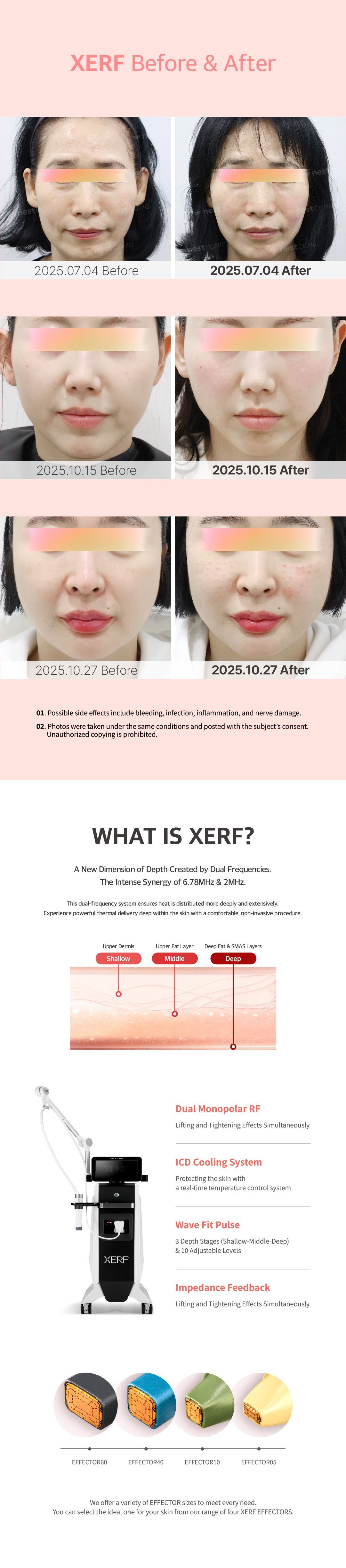
XERF can soften mild to moderate nasolabial folds (smile lines) when they are linked to skin laxity or early cheek descent, by stimulating collagen and firming the mid and lower face. It does not fill deep folds caused by volume loss, which usually need hyaluronic acid filler or a collagen stimulator, often alongside XERF. Results build over 4–8 weeks and are usually best around 2–3 months.
Overview
Can XERF treat nasolabial folds? XERF can improve mild to moderate smile lines caused by skin laxity by stimulating collagen production and tightening the skin. While it does not replace dermal fillers for deep volume loss, it enhances facial support and skin firmness, making it an effective non-surgical option for natural-looking facial rejuvenation.
Nasolabial folds, commonly called smile lines, are the creases that run from the sides of the nose to the corners of the mouth. While everyone has these natural facial folds, they often become deeper with age as collagen declines, skin loses elasticity, and the cheeks gradually descend.
XERF is a next-generation monopolar radiofrequency (RF) treatment that stimulates collagen production and tightens the skin. Although it does not fill deep folds, it can improve mild to moderate nasolabial folds by enhancing skin firmness and providing better support to the mid and lower face.
At Nest Clinic, XERF is frequently incorporated into personalized facial rejuvenation plans for patients seeking natural-looking improvement without surgery.
What Causes Nasolabial Folds?
Nasolabial folds become more noticeable due to several factors, including:
- Natural aging
- Collagen and elastin loss
- Cheek descent
- Skin laxity
- Repetitive facial expressions
- Genetics
- Sun damage
- Loss of facial volume
Because multiple factors contribute to smile lines, successful treatment depends on identifying the primary cause rather than treating the fold alone.
Can XERF Improve Nasolabial Folds?
Yes—but the degree of improvement depends on what is causing the folds.
XERF works best when nasolabial folds are associated with:
- Mild skin laxity
- Early cheek sagging
- Reduced skin elasticity
- Loss of collagen support
By tightening the skin and stimulating new collagen, XERF can make the folds appear softer while improving overall facial contours.
How XERF Works
XERF delivers controlled radiofrequency energy into the deeper layers of the skin.
This process promotes:
- New collagen production
- Collagen remodeling
- Skin tightening
- Improved elasticity
- Better structural support
Rather than filling the fold itself, XERF strengthens the surrounding tissues that help support the midface.
Who Is a Good Candidate?
XERF may be suitable for patients who have:
- Mild to moderate nasolabial folds
- Early signs of facial aging
- Mild cheek descent
- Good skin quality
- A preference for non-surgical treatment
Patients with realistic expectations often experience the greatest satisfaction.
When XERF Alone May Not Be Enough
Deep nasolabial folds are frequently caused by volume loss in addition to skin laxity.
In these situations, your physician may recommend combining XERF with:
- Hyaluronic acid dermal fillers
- Juvelook
- Rejuran
- Skin boosters
- Biostimulatory injectables
- Other facial rejuvenation treatments
A combination approach often produces more balanced and natural-looking results than a single treatment alone.
Treatment Areas
To improve nasolabial folds, XERF is usually applied to supporting areas rather than directly targeting only the crease.
Common treatment areas include:
- Midface
- Cheeks
- Nasolabial region
- Lower face
- Jawline
Treating the surrounding tissues helps improve facial support and overall contour.
When Will You See Results?
Immediately After Treatment
You may notice:
- Mild skin tightening
- Temporary lifting
- Slight improvement in skin firmness
4–8 Weeks
As collagen production increases:
- Skin becomes firmer
- Midface support improves
- Smile lines may appear softer
2–3 Months
Most patients achieve their best results during this period as collagen remodeling reaches its peak.
How Long Do Results Last?
Results generally last 6–12 months, depending on:
- Age
- Skin quality
- Lifestyle
- Degree of collagen loss
- Maintenance treatments
Regular maintenance can help preserve skin firmness and facial support.
XERF vs Fillers for Nasolabial Folds
These treatments address different aspects of facial aging.
XERF is best for:
- Skin laxity
- Mild sagging
- Collagen stimulation
- Overall skin tightening
Dermal fillers are best for:
- Volume loss
- Deep static folds
- Immediate correction
- Structural support
Many patients benefit from combining skin tightening with volume restoration for the most natural outcome.
Benefits of XERF for Smile Lines
Patients often choose XERF because it provides:
- Non-surgical treatment
- Natural collagen stimulation
- Improved skin elasticity
- Better facial contours
- Firmer cheeks
- Minimal downtime
- Gradual, natural-looking improvement
Why Choose Nest Clinic for XERF?
At Nest Clinic, we evaluate the entire face rather than treating smile lines in isolation. Our physicians assess skin laxity, cheek support, facial volume, and collagen quality to determine whether XERF alone or a combination approach will provide the most natural-looking results. This individualized treatment philosophy helps restore facial harmony while preserving your unique features.
Reviewed by Dr. Joo Sohee
Representative director of Nest Clinic Gangnam, a doctor-led aesthetic clinic with a female medical team that treats local and international patients. This page is reviewed for medical accuracy; it is general information, not a diagnosis. Treatment plans are decided after an in-person consultation.
Clinic treatment counts as reported by Nest Clinic. About the clinic
Frequently asked questions
Can XERF remove nasolabial folds?
XERF cannot fully erase deep folds, but it can soften mild to moderate folds caused by laxity by tightening skin and stimulating collagen.
Is XERF better than fillers for smile lines?
They treat different causes: XERF improves firmness and support, fillers restore lost volume. Many patients get the most natural result by combining them.
Does XERF treat the fold directly?
Usually the energy is applied to the supporting midface, cheeks and lower face rather than only the crease, to improve overall support.
How many XERF sessions are needed?
Many patients notice improvement after one session, with maintenance commonly considered every 6–12 months.
Is there downtime after XERF?
Minimal; mild redness, warmth or swelling generally settles within hours to a few days.
Related treatments
Want softer smile lines without surgery?
Send us a photo and your goals — a doctor reviews it and our English-speaking coordinator replies with a personalised plan and price.
4F–5F Seocho Building, 453 Gangnam-daero, Seocho-gu, Seoul
1-min walk from Sinnonhyeon Station Exit 7 (Line 9)
7–10 min from Gangnam Station Exit 10/11
+82-10-4843-2867