Can International Visitors Receive Treatment Without Speaking Korean?
Yes. Many skin clinics in Seoul, especially in Gangnam, offer English-speaking doctors, international coordinators or medical interpreters, along with translated consent forms and aftercare sheets. The government-run Medical Korea call center (1577-7129) also helps international patients 24 hours a day in six languages. Confirm the type of language support when you book.
Language Support Comes in Three Main Forms
"English support" can mean different things at different clinics. Knowing the options helps you ask the right question when you book.
| Support | How it works | Good to know |
|---|---|---|
| English-speaking doctor | The doctor explains the diagnosis and plan directly | Ask whether the treating doctor speaks English |
| International coordinator | Helps with booking, registration, payment and aftercare | May not replace the doctor's explanation |
| Medical interpreter | Translates during the consultation | Speak in short sentences and pause |
| Translated documents | Consent forms, quotes and aftercare sheets | Ask for them before treatment |
Korea also has a national qualification for international medical tourism coordinators, who are trained to help foreign patients through registration, consultation and aftercare.
The Whole Visit Can Run in English
At many international clinics, language support covers every step, from the moment you arrive until you leave with your aftercare instructions.
- Booking Message the clinic in English by WhatsApp, LINE, KakaoTalk or email.
- Arrival A coordinator helps you register and explains the questionnaire.
- Consultation The doctor examines your skin, speaking English or working with an interpreter.
- Plan and consent You review the plan, price and consent form in a language you understand.
- Treatment Staff explain each step and check your comfort.
- Aftercare You receive written instructions and a contact for questions.
Consent Is the Moment Language Matters Most
Consent forms explain the treatment, expected effects, possible side effects and your agreement to proceed. Before you sign, check that you understand the treatment name, the area, common side effects and what to do if a problem appears.
If the form is only in Korean, ask for a translation or a verbal explanation of each section. You can always ask for time to read the form before signing.
Do not sign anything you do not understand.
An Interpreter Helps Even If You Speak Some English
Consider asking for an interpreter if your English is basic, your concern is complex, or you have medical conditions or allergies that must be understood exactly. Ask in advance, since interpreters for less common languages may need to be booked. Many international clinics include coordinators or interpreters as part of their service, but confirm whether there is any extra cost.
If English is not comfortable for you either, ask whether the clinic has staff who speak your language. Some clinics offer Japanese, Chinese, Russian or other languages.
Five Steps Make Sure Nothing Gets Lost in Translation
- Confirm support when booking Ask whether the consultation is in English or with an interpreter.
- Prepare a short note Write your concern, medications, allergies and past treatments in simple English.
- Ask for written information Request the plan, price and aftercare in writing.
- Repeat back the plan Summarise what you heard and ask the doctor to confirm.
- Keep the contact Save the clinic's messaging account for questions after treatment.
A Short Written Note Does Half the Work
A note in simple English is the most reliable language tool you can bring. It works with any doctor, coordinator or interpreter, and it makes sure the details that affect safety are not forgotten in the moment.
| Write down | Example |
|---|---|
| Main concern | "Brown spots on both cheeks for three years." |
| Goal | "More even tone, natural result, short recovery." |
| Medications | "Daily aspirin. Fish oil supplement." |
| Allergies | "Allergic to lidocaine cream." |
| Past treatments | "Lip filler one year ago. Laser for spots last spring." |
| Flight date | "Flying home next Saturday." |
If you are more comfortable in another language, write the note in both your language and simple English. Hand it over at registration so the doctor can read it before the consultation.
Coordinators Help, but the Doctor Explains the Medicine
International coordinators make the visit much easier. They help with booking, forms, payment, directions and aftercare questions. However, decisions about diagnosis, treatment choice and risks belong to the doctor. If a coordinator explains the plan, it is reasonable to ask: "Could the doctor explain the risks to me as well?" Good clinics expect this and will arrange it.
Korea Has Free Helplines for International Visitors
- 1577-7129: Medical Korea call center for international patients, 24 hours, six languages.
- 1339: 24-hour medical consultation line with interpretation support.
- 1330: Korea travel helpline in several languages.
- 119: emergency ambulance.
If you have a problem after treatment and cannot explain it in Korean, contact the clinic in English first. The Medical Korea call center can also help.
During Treatment, a Few Simple Words Are Enough
Once the plan is agreed, the treatment itself needs very little language. Staff usually explain each step with short phrases or gestures, such as when numbing cream goes on, when the laser starts or when to close your eyes. It helps to know a few simple signals in advance.
- "Please stop for a moment" if you need a break.
- "It hurts" or "It is too hot" if you feel more than expected.
- "I feel dizzy" if you feel faint, especially during injections.
- Raising your hand works too. Agree on this signal before starting.
Paying Without Korean Is Simple
Clinics accept international credit cards, and staff can explain the final amount in English. Ask for an itemised receipt that lists each treatment and shows that 10% VAT is included. If you need a receipt in English for your own records, ask before you pay, since some clinics prepare it separately.
Finding the Clinic Is Often Harder Than the Consultation
Many clinics in Gangnam are inside large buildings with several entrances. Save the clinic's address in Korean on your phone so you can show it to a taxi driver. Ask the clinic for the nearest subway exit and the floor number, and arrive ten to fifteen minutes early to find the right entrance and lift.
Communication Should Continue After You Fly Home
Questions sometimes come up after you return home. Before you leave, ask which messaging apps the clinic uses and whether they can reply in English or your language. Keep your treatment record, product names and amounts, since this helps any doctor at home who may need to see you later.
Say this when you book
"Will the doctor speak English with me, or will an interpreter join?"
"Is the consent form available in English or my language?"
"Who can I contact in English after treatment, and how?"
Clear, quick answers to these questions are usually a good sign of how communication will feel on the day. With a little preparation, not speaking Korean is rarely a barrier to safe, comfortable skin treatment in Seoul.
For more practical tips, read the top questions foreigners ask before skin treatments in Korea and how to find an English-speaking dermatologist in Seoul, or contact us in English.
Frequently Asked Questions
Can I book an appointment in English?
Yes. Many clinics reply in English by WhatsApp, LINE, KakaoTalk or email.
Will the clinic help me after I go home?
Many clinics answer questions by messaging app. Ask how to contact them before you leave and keep your treatment record.
Are aftercare instructions available in English?
Many international clinics provide them. If not, ask the clinic to send the key points by message so you can translate them.
Do I need to speak Korean at the pharmacy?
Not usually. Show the prescription or product name. Pharmacists in central Seoul often understand basic English.
Can a friend interpret for me?
Yes, for general conversation. For medical risks and consent, a trained interpreter or English-speaking doctor is safer.
Talk to Us in English
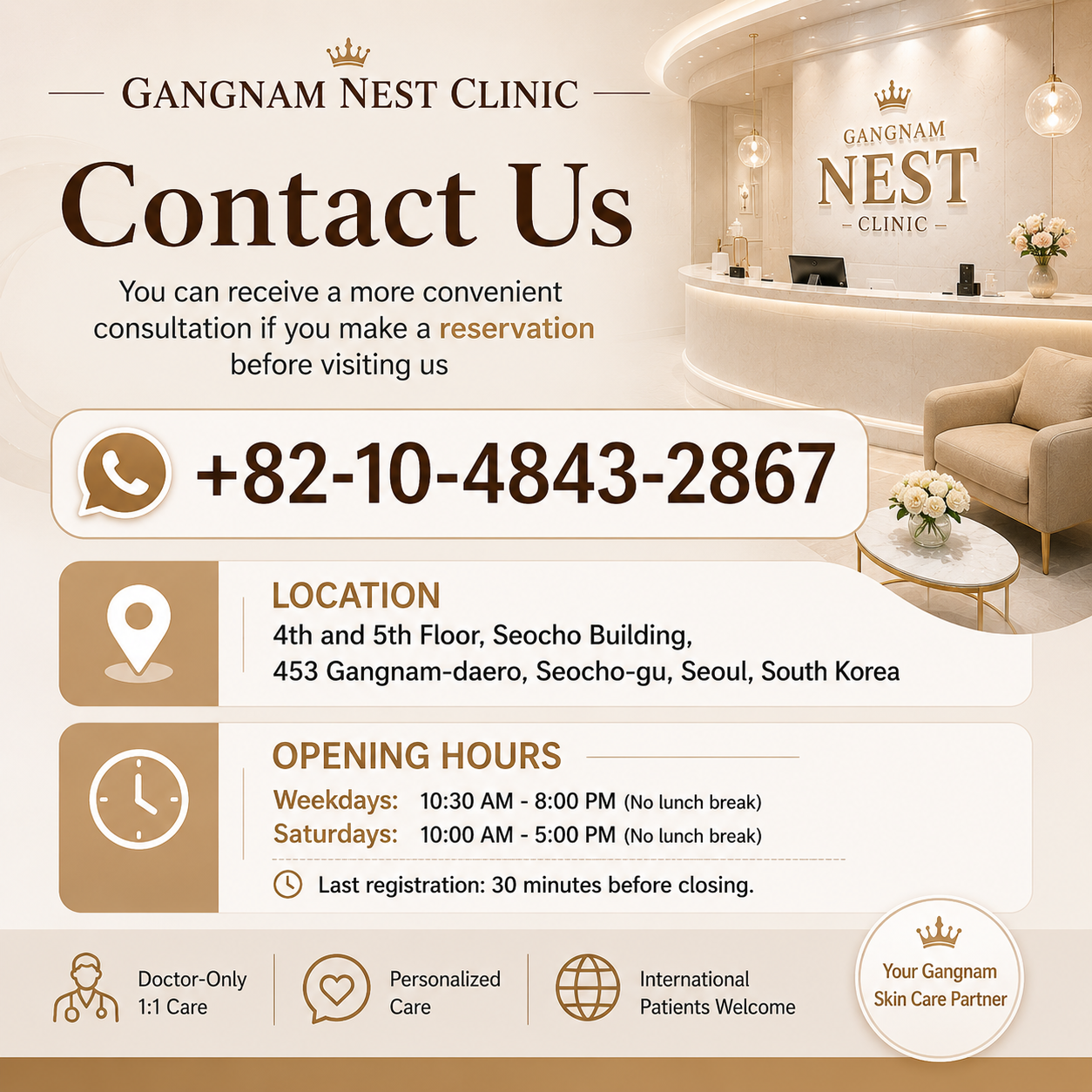
Message us with your skin concern and travel dates. We will reply in English and explain how your consultation works.
Book Your ConsultationReferences
- Korea Health Industry Development Institute (KHIDI) — Medical Korea Information Center.
- HRD Korea — International Medical Tourism Coordinator national qualification.
- The Korea Times — "Sick in Korea after hours? Here's what visitors need to know" (2026).
- Korea Tourism Organization — 1330 Korea Travel Hotline.
This guide was prepared and reviewed by our clinical team using official information for international patients in Korea. Services can change, so please confirm details before you travel. It is general information, not medical advice.